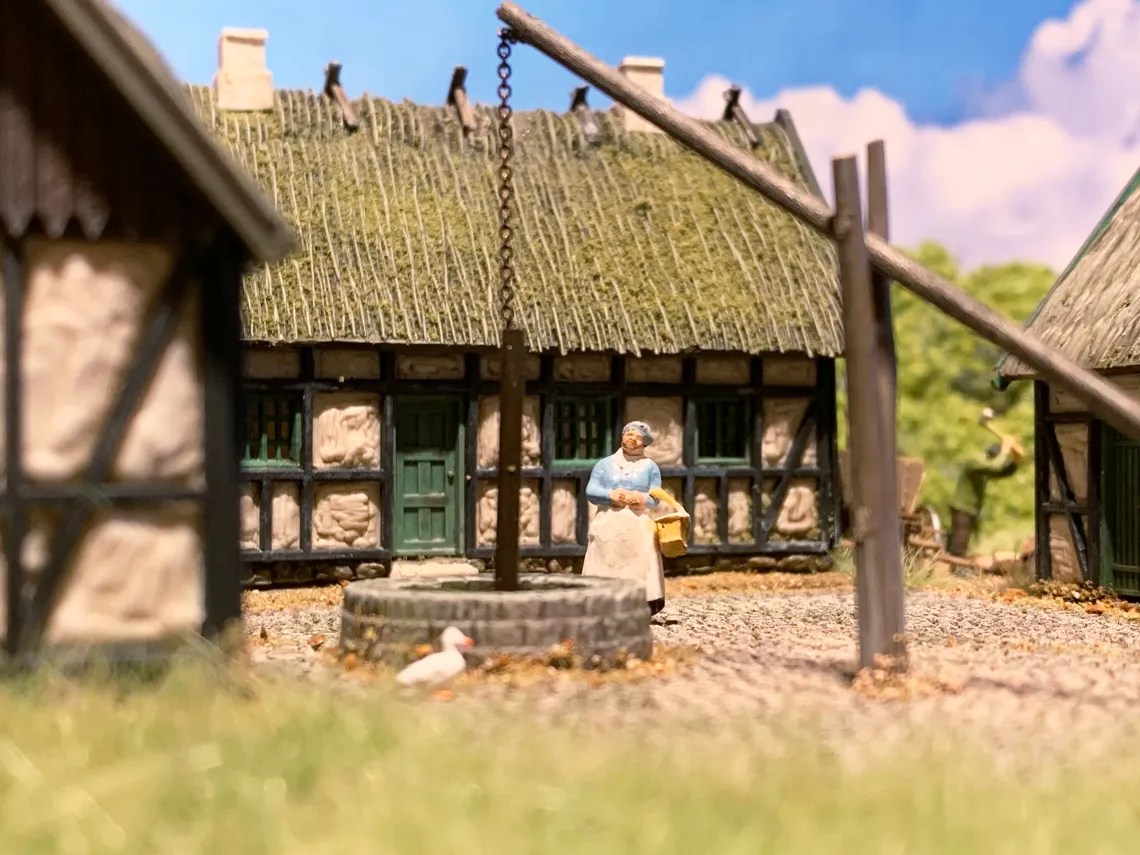
The farm buildings were finished, so now it was time to take a look at the surroundings.
I started by looking at lots of old paintings and photographs to get an idea of what a farm of roughly this type looked like in the first half of the 20th century.
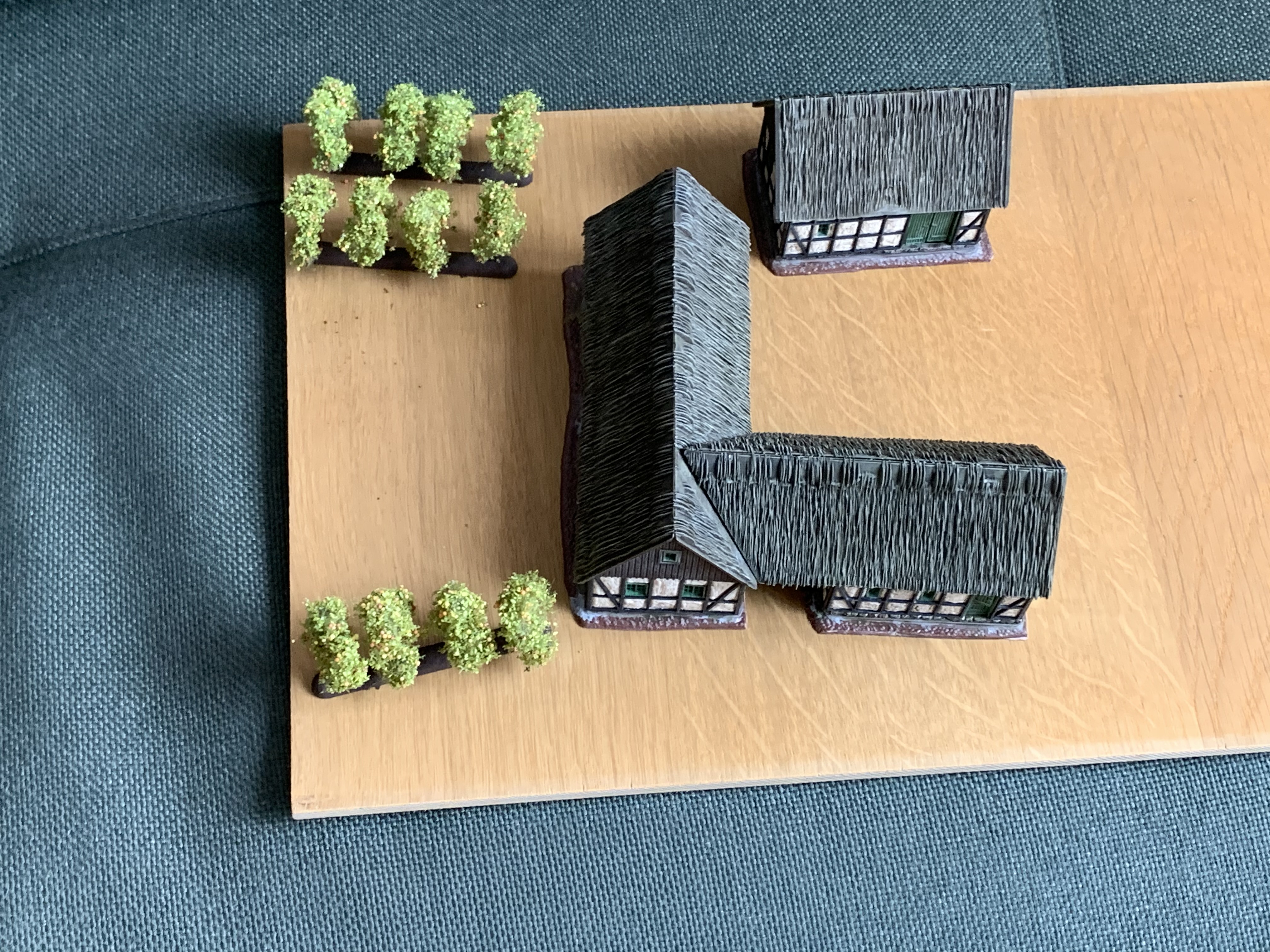
After that, I played around with the positioning of the buildings and trees on a wooden board.
I wanted a small garden for the farmhouse with apple trees on either side, whilst on the right there should be a lovely view into the farmyard with the well.

There should be room for a small driveway, so there would be somewhere to photograph models of cars and horse-drawn carriages – perhaps Lauritz’s trusty old Ford Model T?
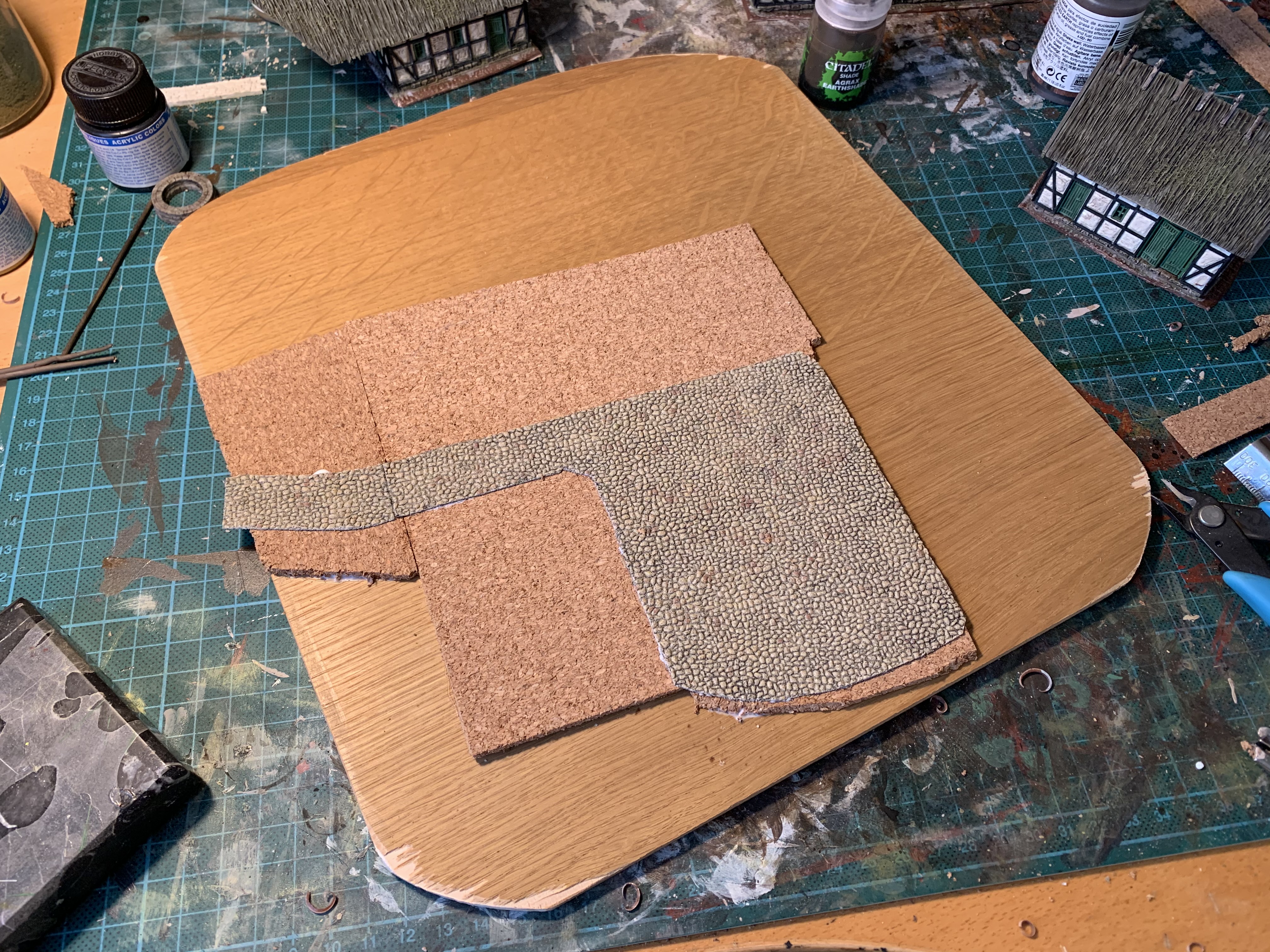
The three buildings were actually joined together on a base plate, but I ended up cutting them all free so that I could play around with their positioning more easily.
Above, I’ve placed a layer of cork to raise the main house and the side wing slightly, whilst the smaller detached house will sit a little lower.
On top, I’ve glued down the cobbled courtyard – these are Noch’s lovely new stone rolls, no. 60326, which are really good to work with.
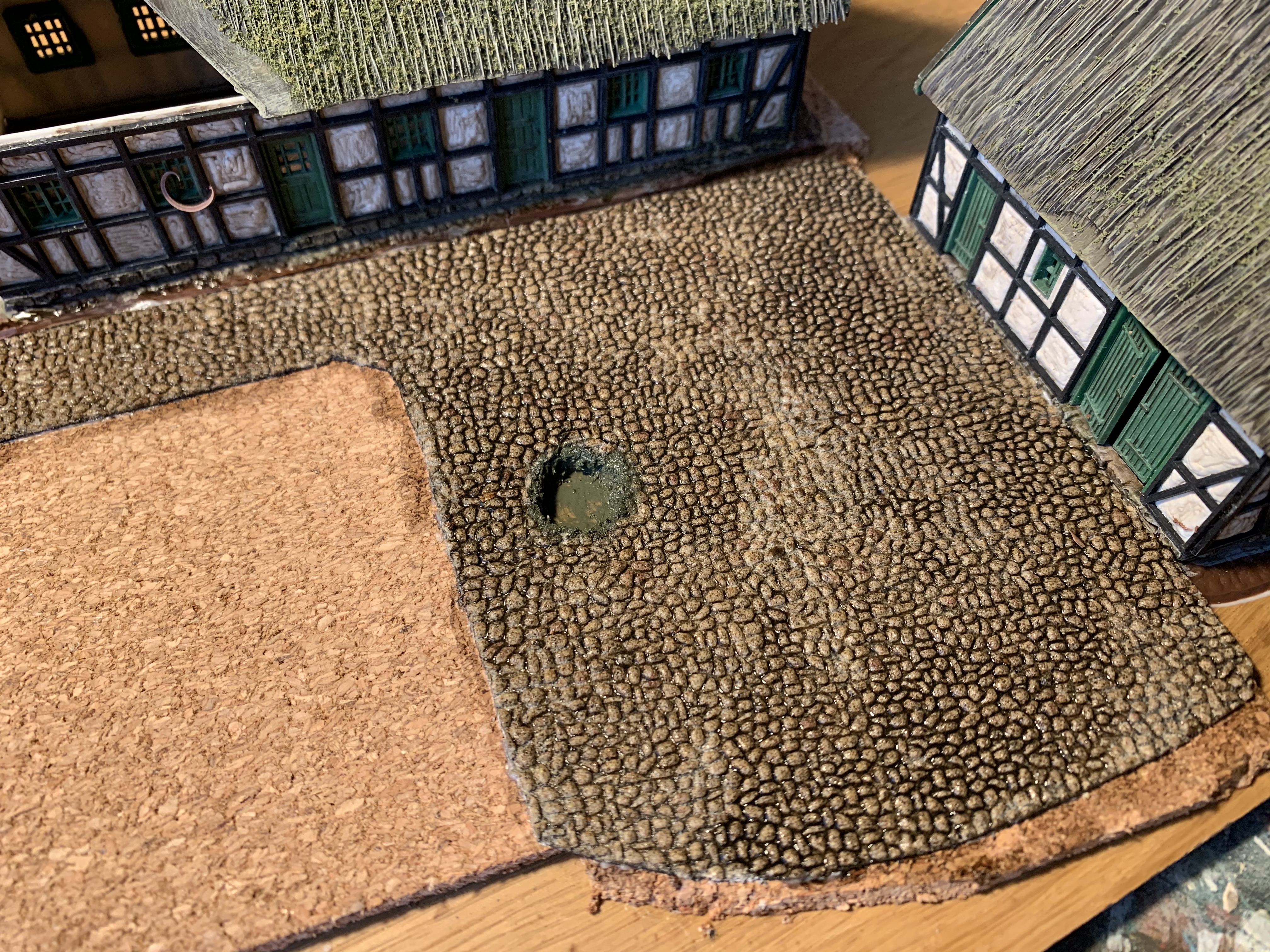
Heljan’s kit came with a nice water pump, but for old Maren & Lauritz at Søndergaard it is a bit too modern. They’re still using the old swing well from ancient times!

The last wing was put in place, and the joints between the thatched roofs were concealed with a little extra moss.
The stones in the farmyard have been given a brown wash, followed by a green wash in selected areas and then dry-brushed with a sandy colour.
The well is somewhat unusual for such a small, humble farmstead, being made of beautiful, hewn stones. According to Maren & Lauritz’s ancestors, the well is older than the farmstead and dates back to an old castle that once stood on the same site. But many tall tales have been told since the farmstead was built in 1799, so who knows? 🙂
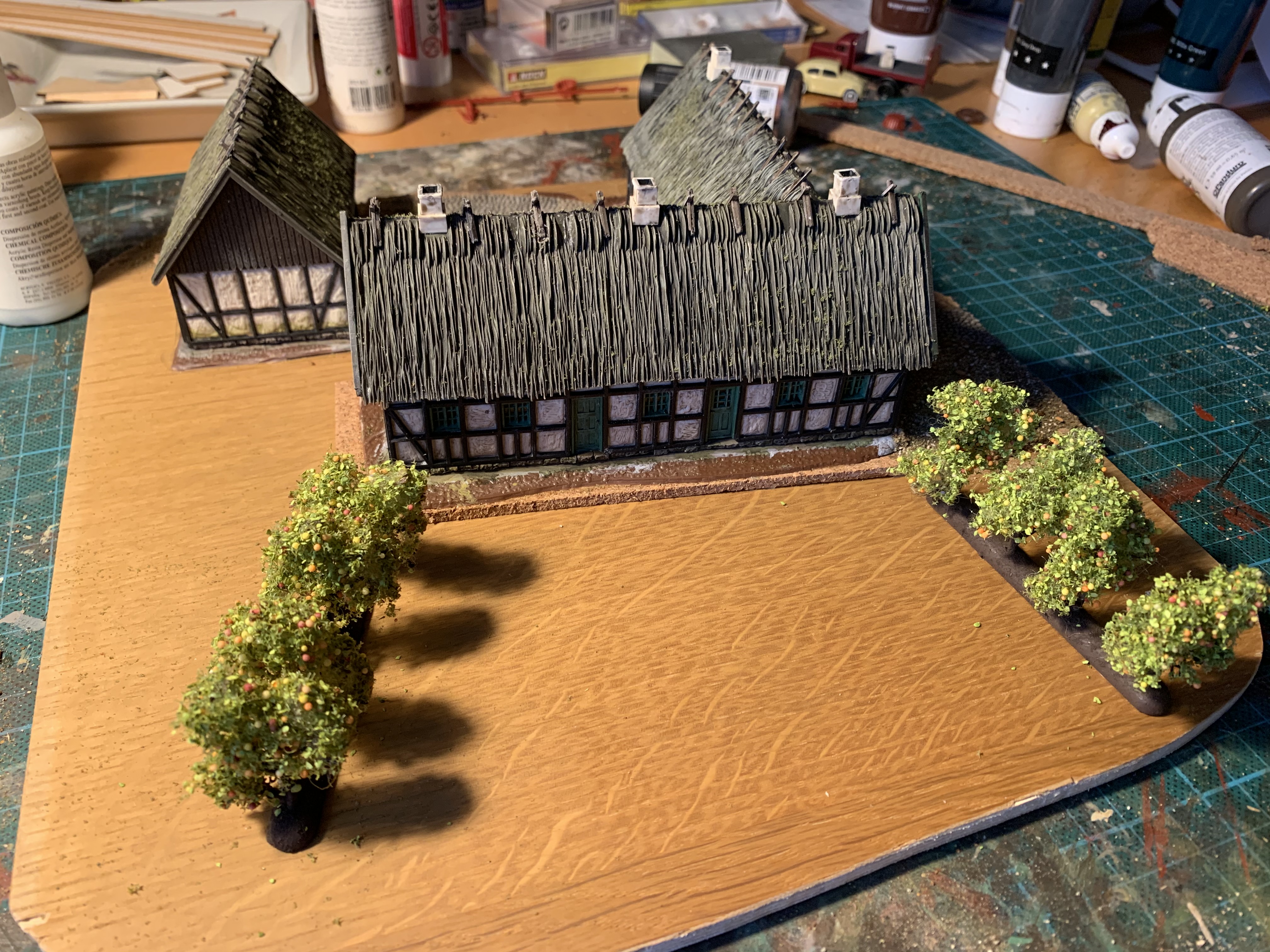
In the garden, the small apple trees have been glued into place and frame the future lawn beautifully.
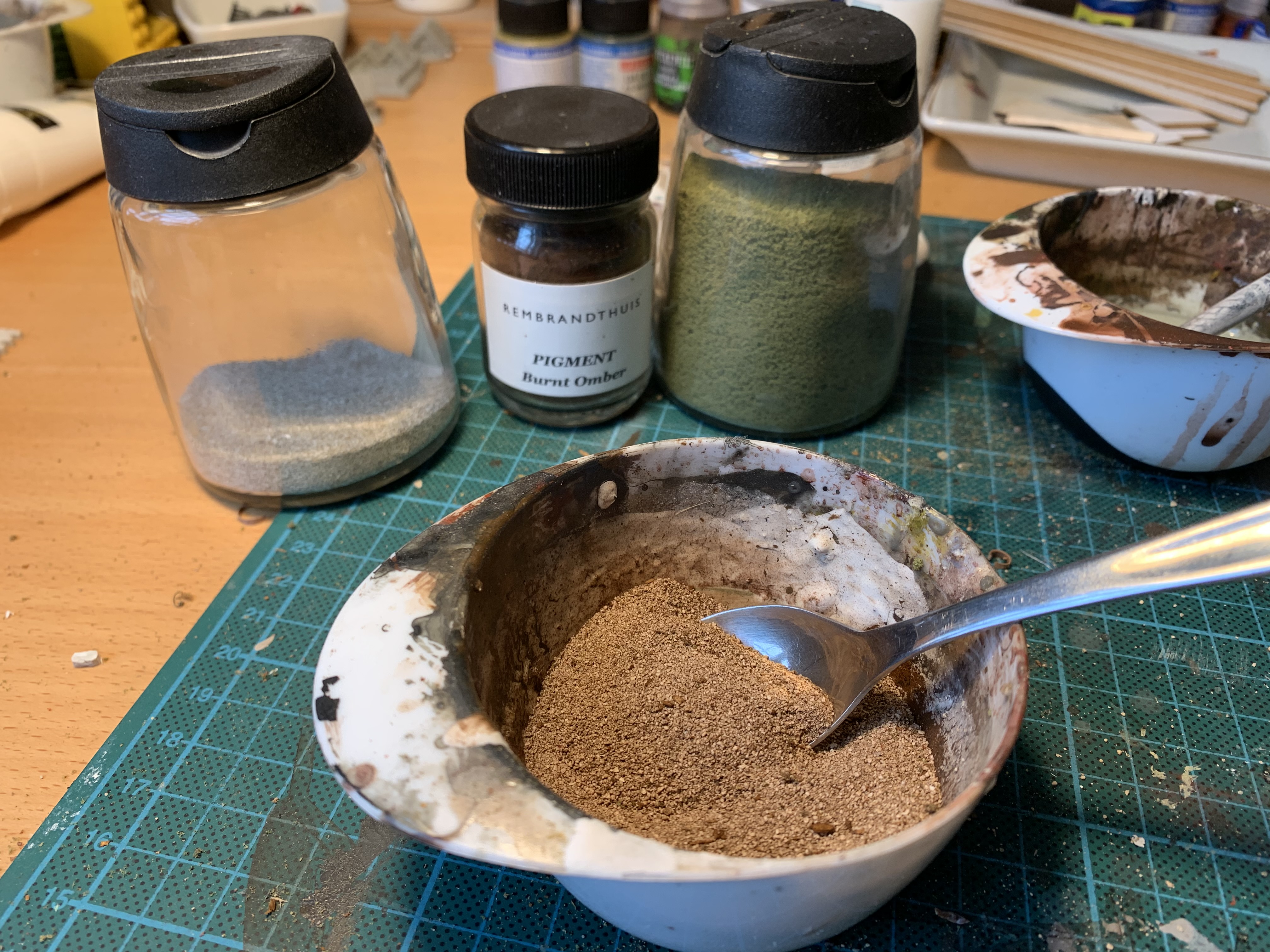
Before I start on the grass, hedges, fences, climbing plants and so on, I like to cover all surfaces with a layer of soil.
An easy way to do this is to pop into a pet shop and buy chinchilla sand, which is very fine. However, it’s a bit light in colour, so I mix in a little brown pigment powder to give it a nice earth/gravel colour. I also add various types of dusty green straw material, some ultra-fine wood shavings, small stones and whatever else happens to be lying on my workbench. 🙂
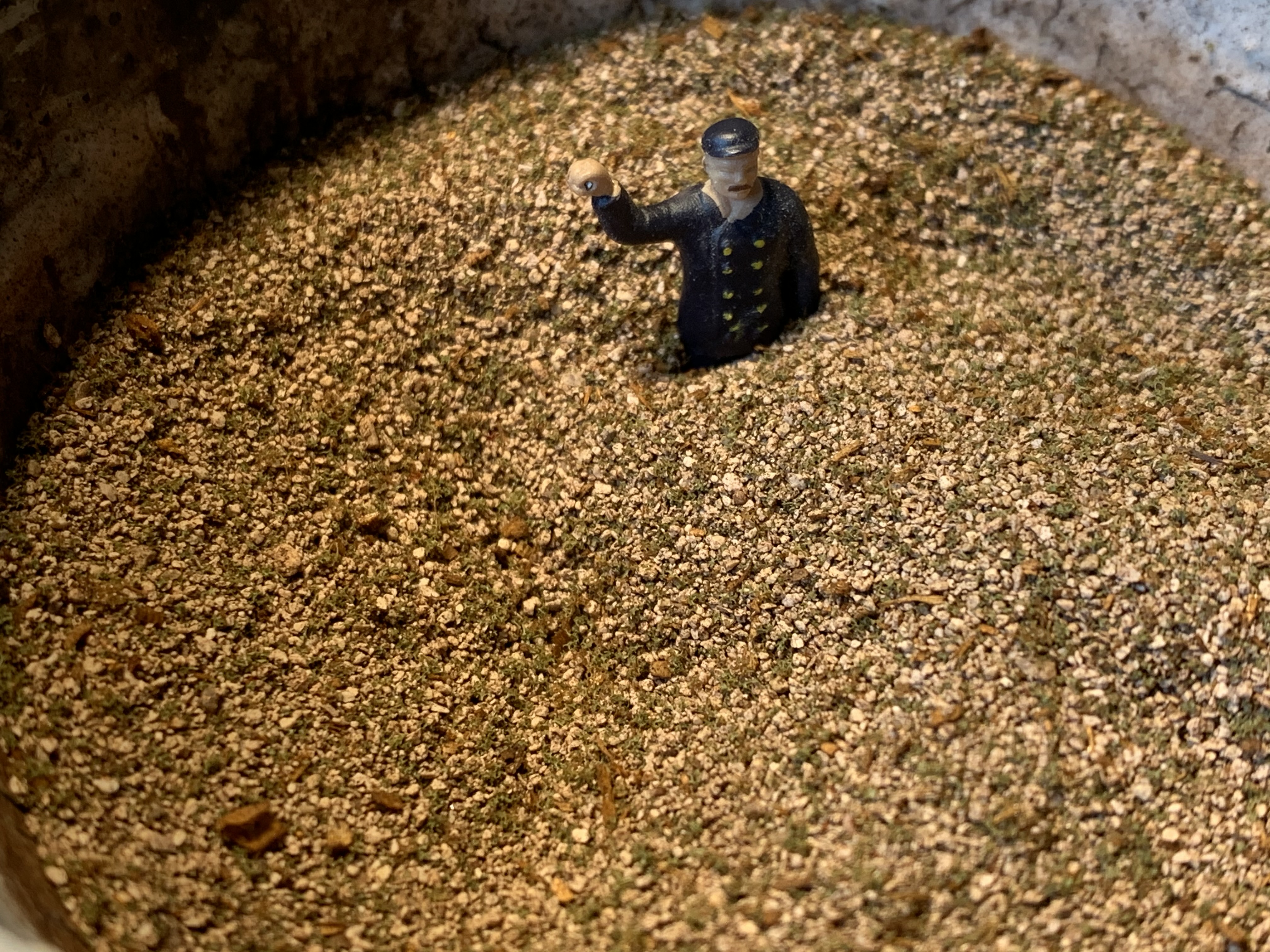
It provides realistic ground cover and, firstly, ensures a good base for the artificial grass. Secondly, you can leave some of it exposed to add more variety to the surfaces.

Here, the garden is being covered with a layer of topsoil. This technique also evens out any differences in height between the various elements, but there’s no need to be too meticulous – the grass and vegetation will take care of the rest.
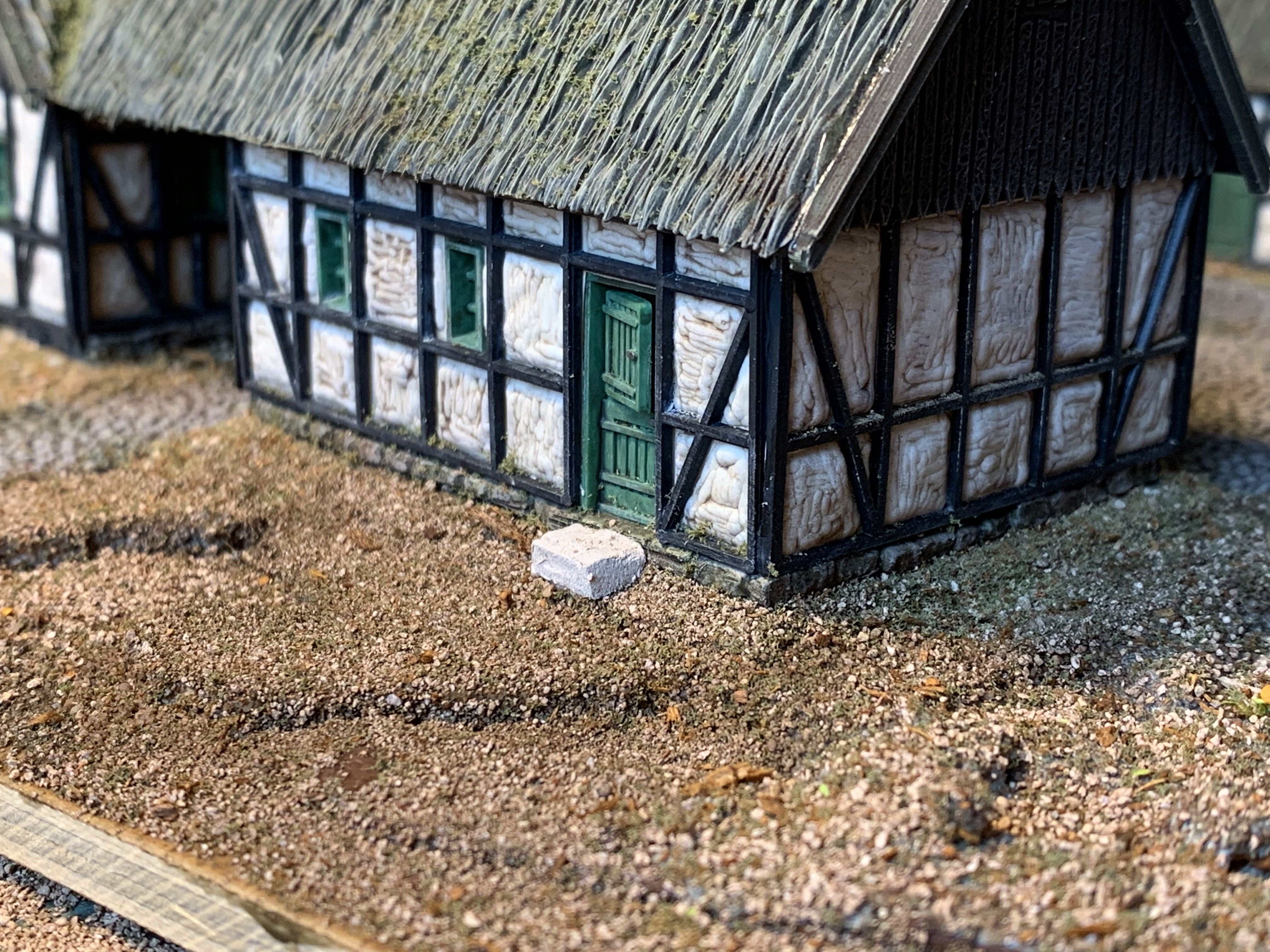
At the last minute, I remembered to cut some doorsteps and paint them a stone colour before the soil was put in place. They’ll probably need a bit of a patina later, once everything’s settled.
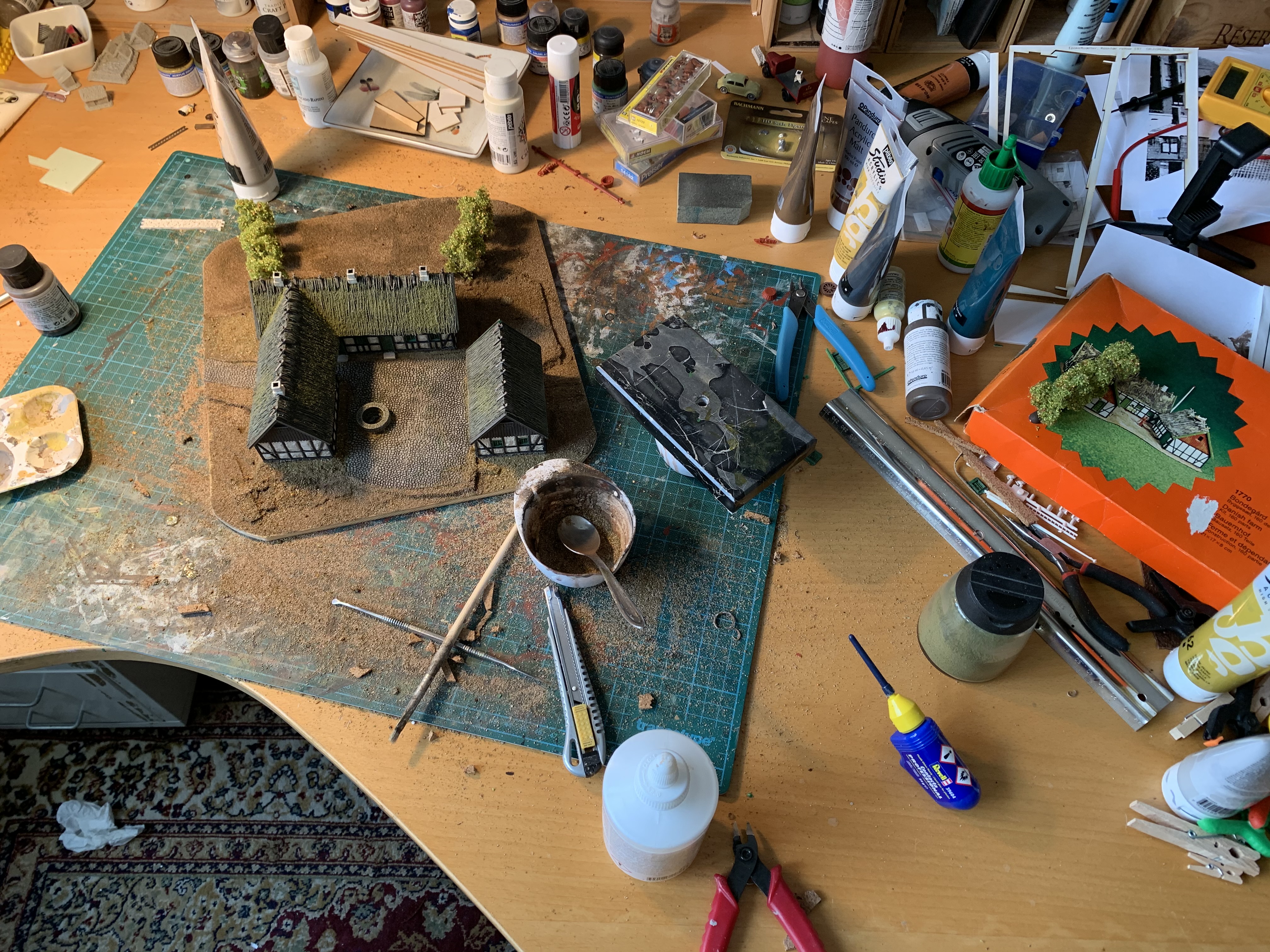
But then it was time to have a bit of a tidy-up. My creativity and enjoyment of modelling decline in direct proportion to the amount of mess on the workbench, and now all the groundwork was finished.
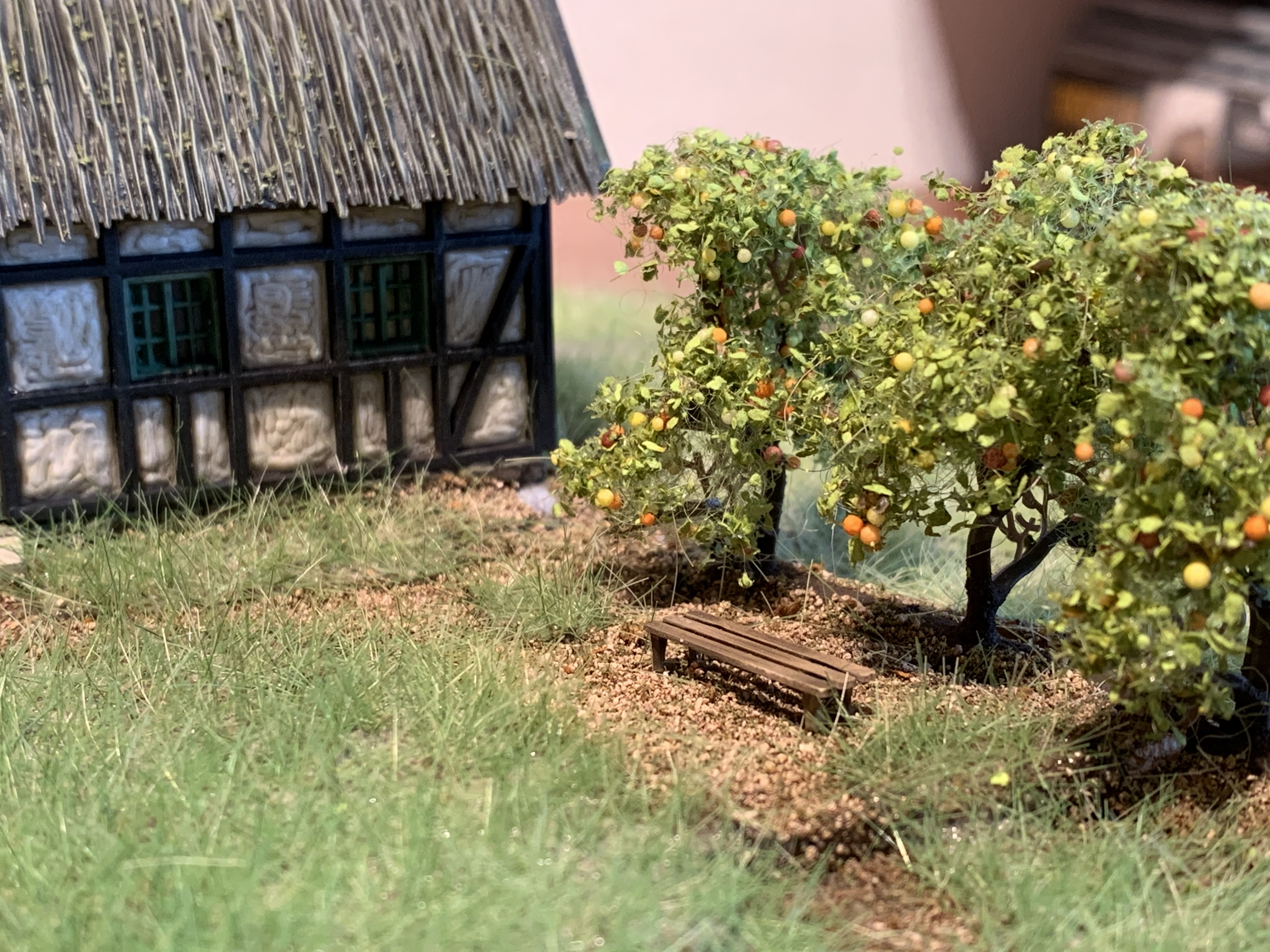
Sowing grass is a lovely stage in diorama-building – suddenly, the whole thing looks much more realistic. But one important thing to bear in mind when sowing fibre grass on a model is to remember not to put it everywhere. Worn paths and bare patches add to the realism.
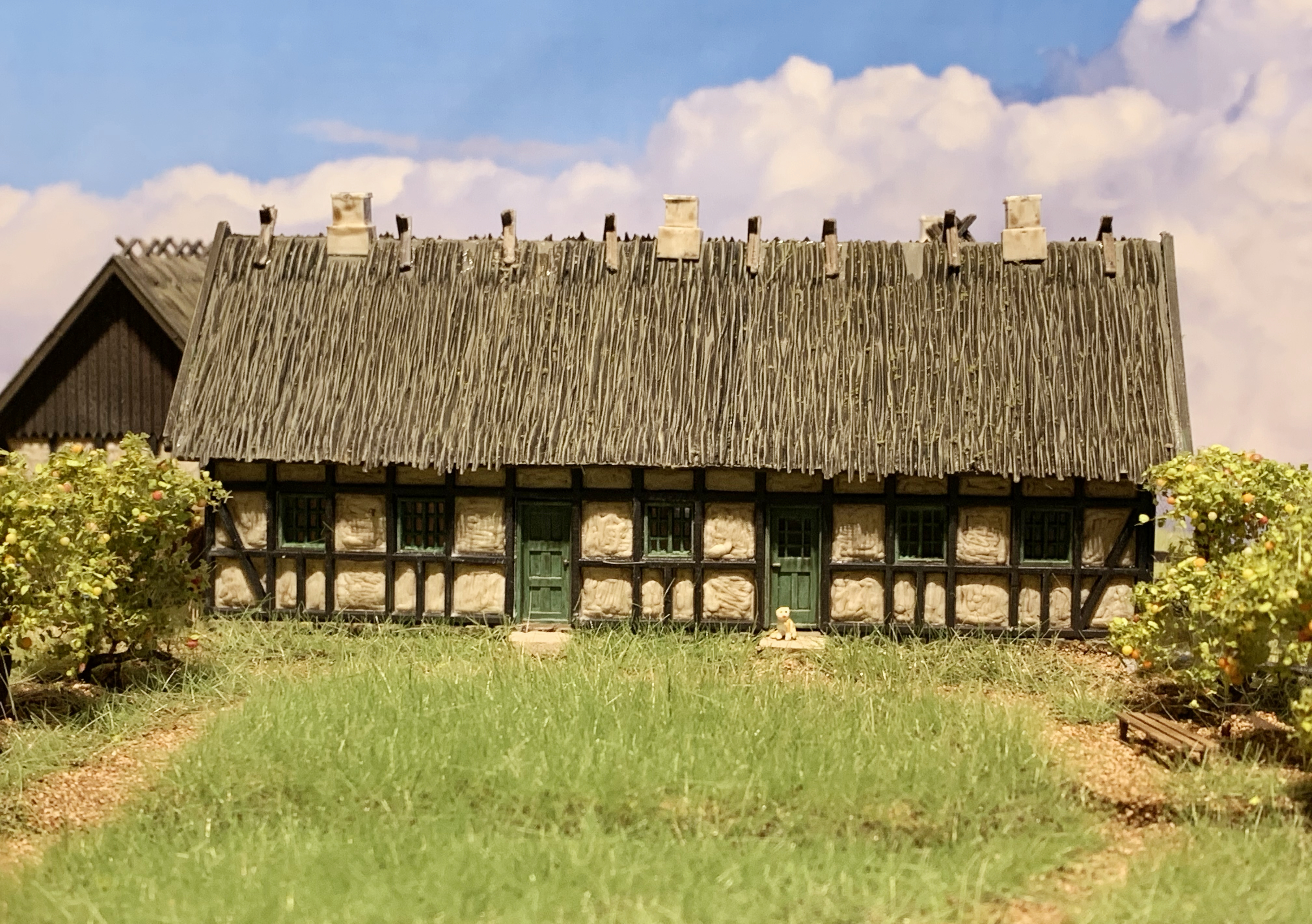
I always use different colours of grass together so that I can vary the shades. The Søndergaard diorama is set on a summer’s day in the 1940s, so the grass can be a bit parched.
But on the lawn in front of the farmhouse, I used almost exclusively green grass to create a well-watered lawn. Around the edges, I added much more yellow grass.
But now it was time for my favourite part of building the diorama: adding details. Can you spot the little dog? (Or is it a cat??)

Standing between the houses is old, white-haired Lauritz, chopping firewood. It seems to be moving quite slowly, but then again, it’s only needed for cooking.
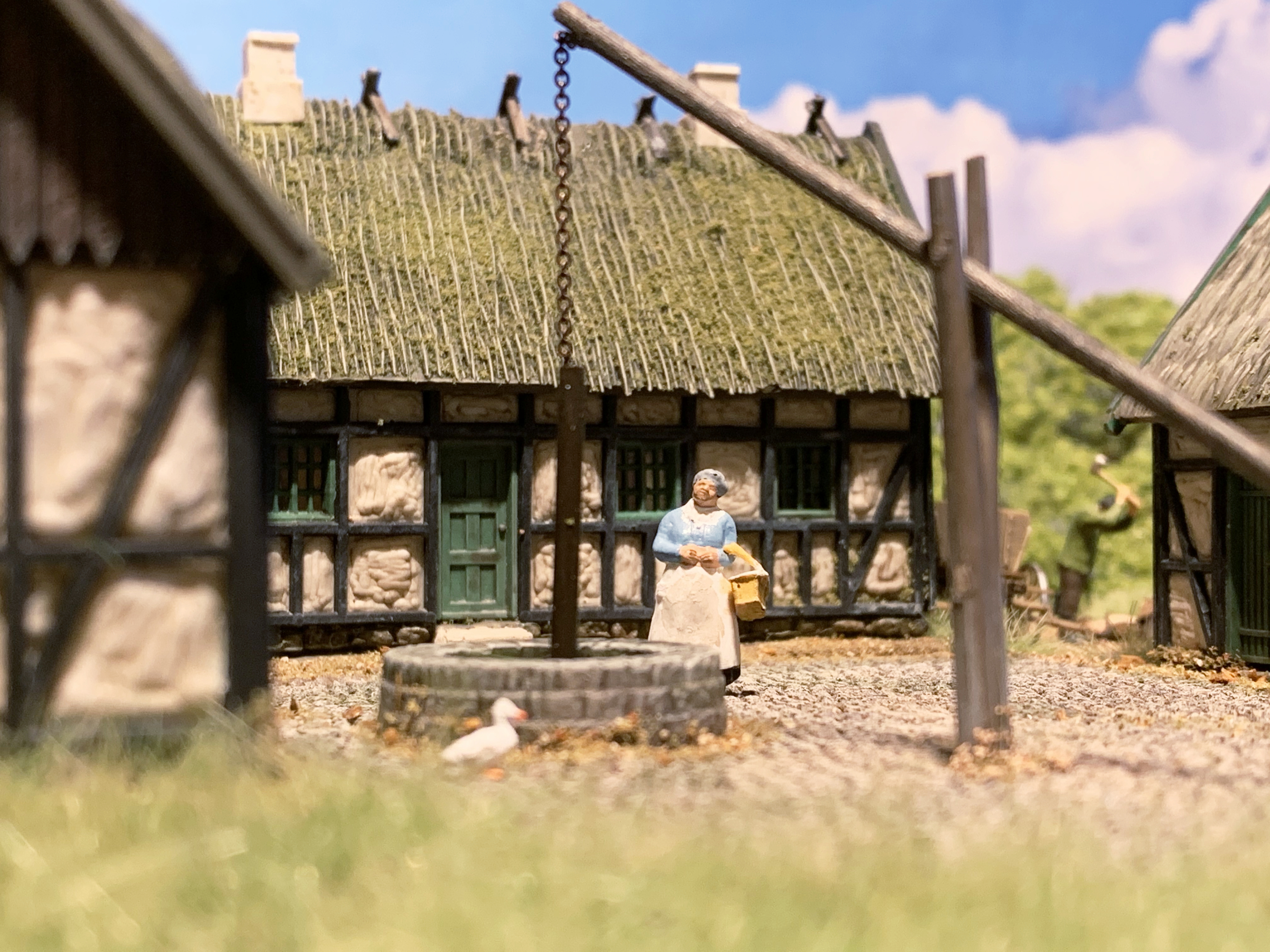
In the courtyard by the swing well, old Maren ponders the meaning of life, whilst the white duck is likely not thinking that far ahead 🙂
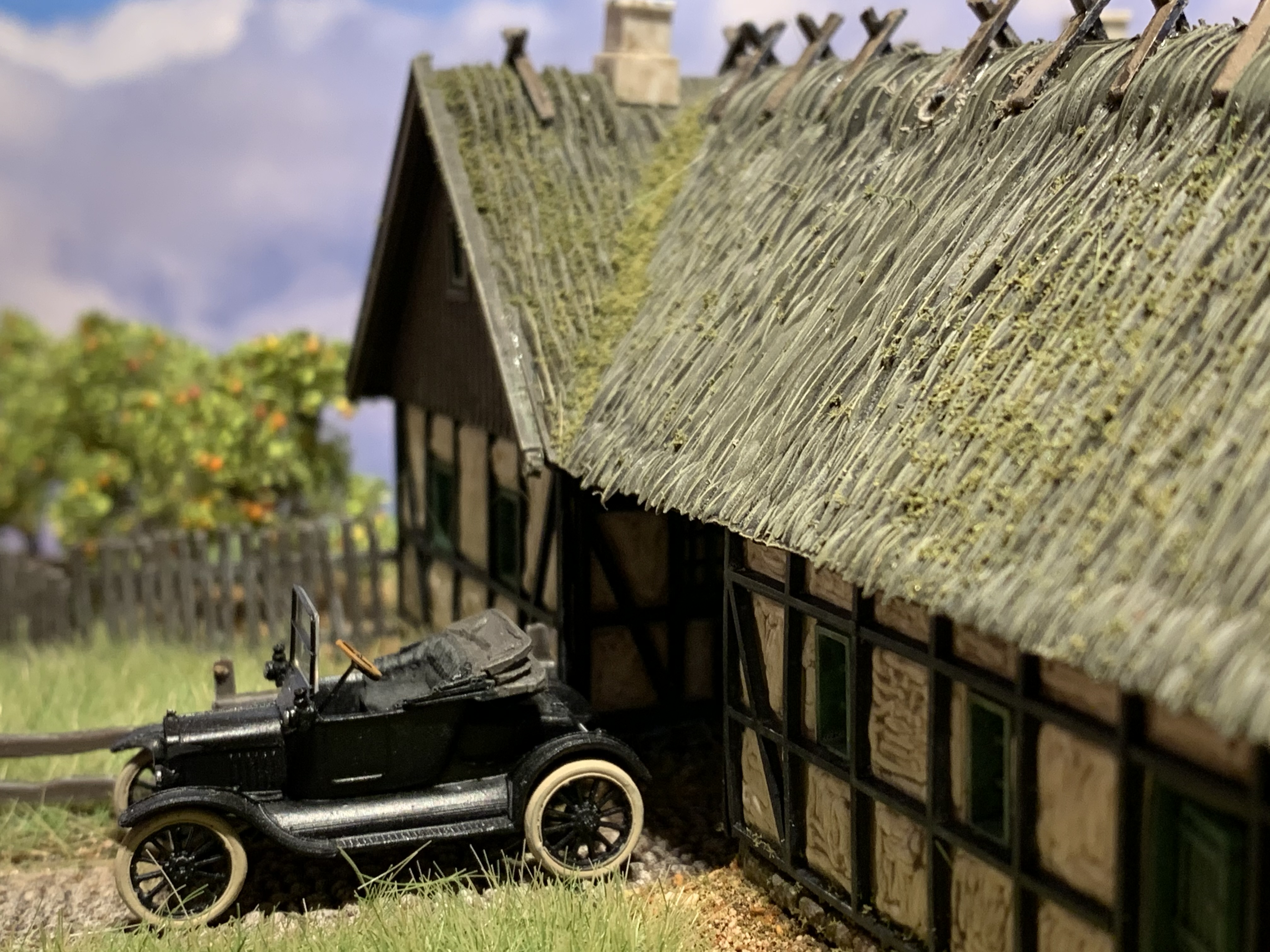
A guest has parked his Ford Model T in the driveway whilst visiting Maren & Lauritz. Unlike everything else, however, the car isn’t glued in place – I prefer to be able to move vehicles around as needed…
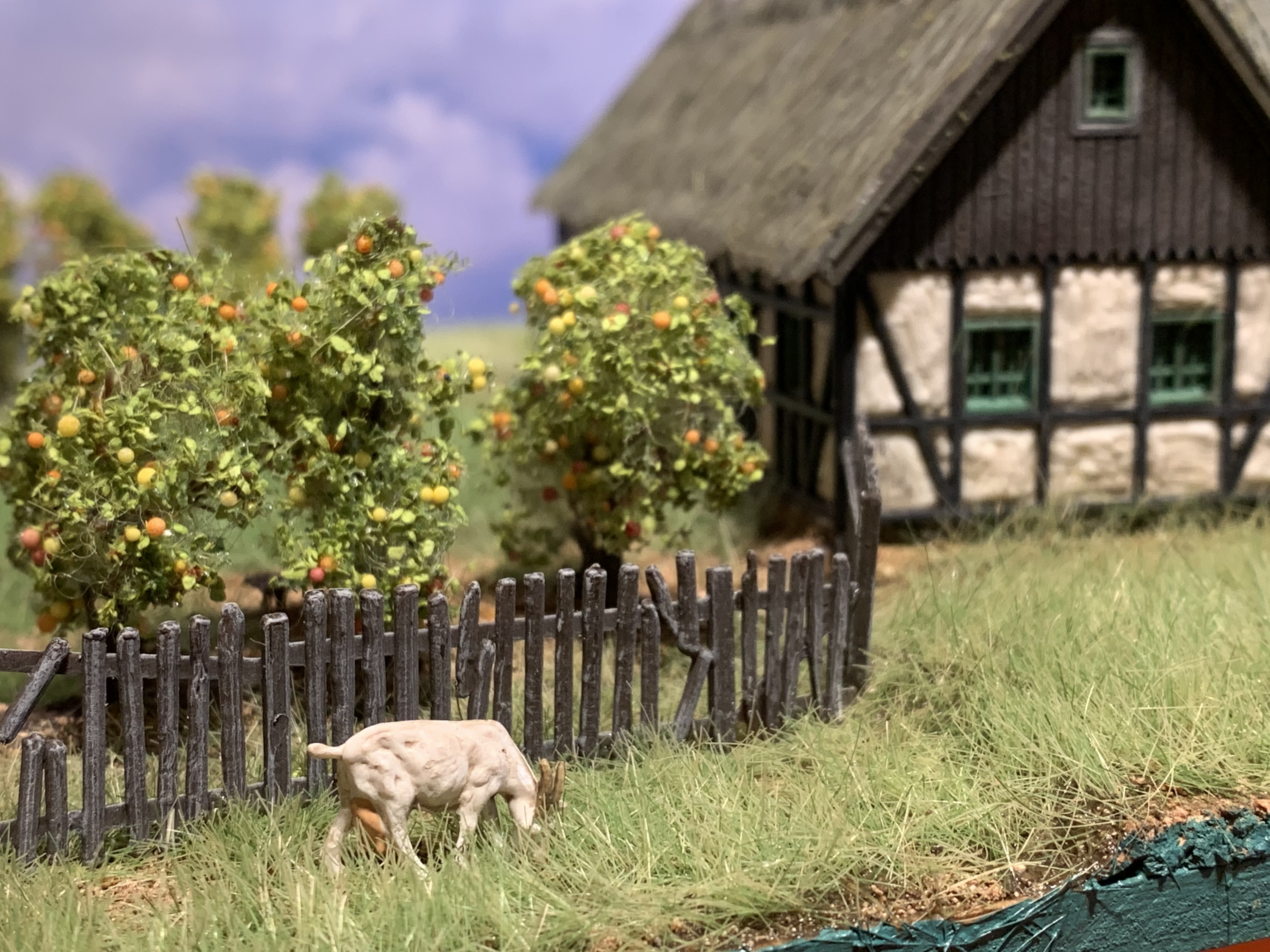
Nearby, Gerda the goat is delighted that the ripe apples have started to fall – even inside her enclosure.
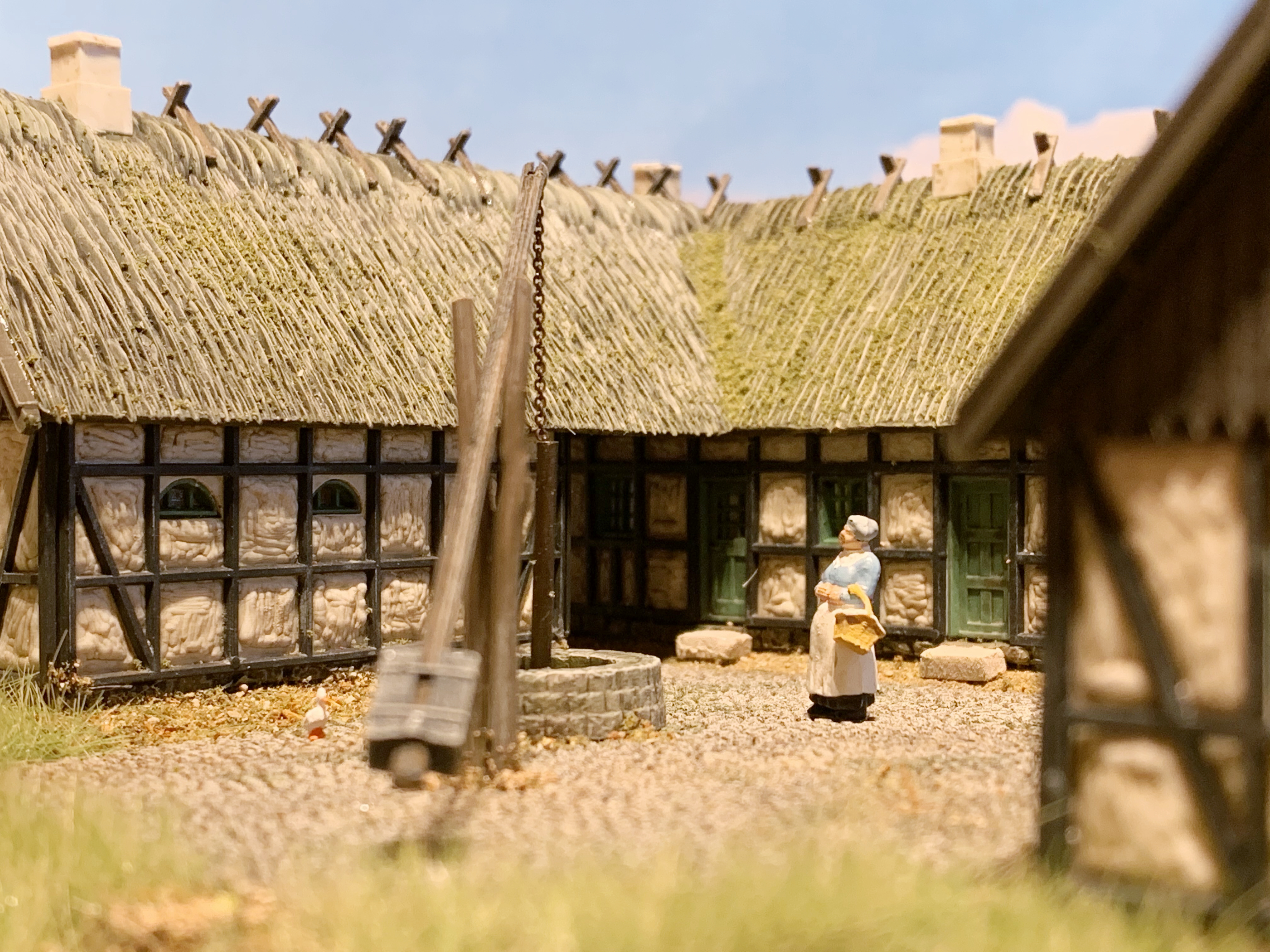
Whilst Maren continues to ponder, I have to finish for the day at the Søndergaard diorama.
There are still a few trees, bushes, hedges, flowers and a few more details missing, but it is really coming together now…

