
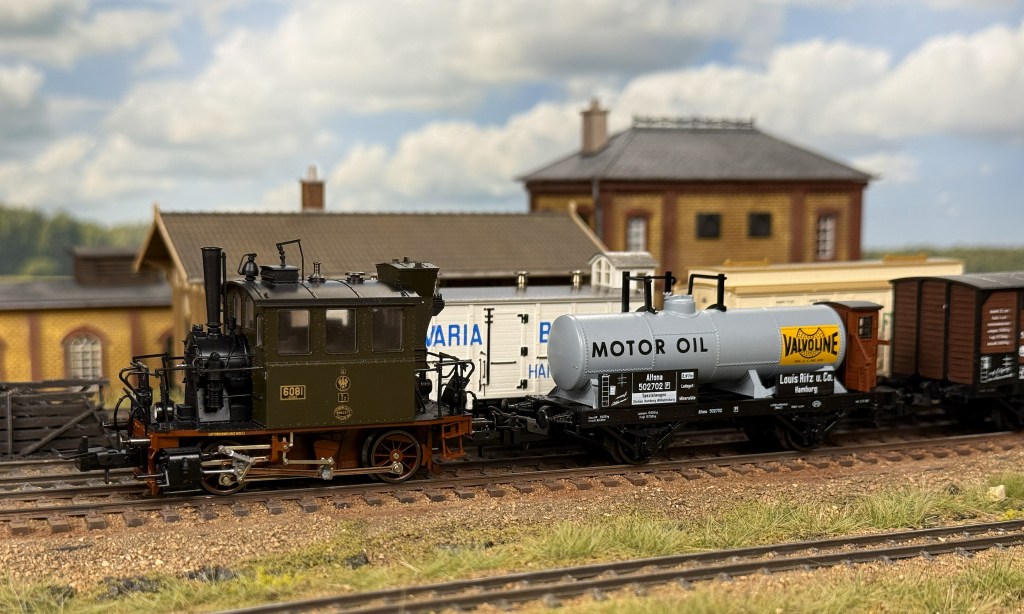
Recently I visited one of the two great local model railways shops here in Copenhagen. Both shops have a wonderful section with used models, which in my opinion is one of the main attractions of the shops. Everytime I visit, I am struck by the abundance of various models available, and I usually find something to my liking.
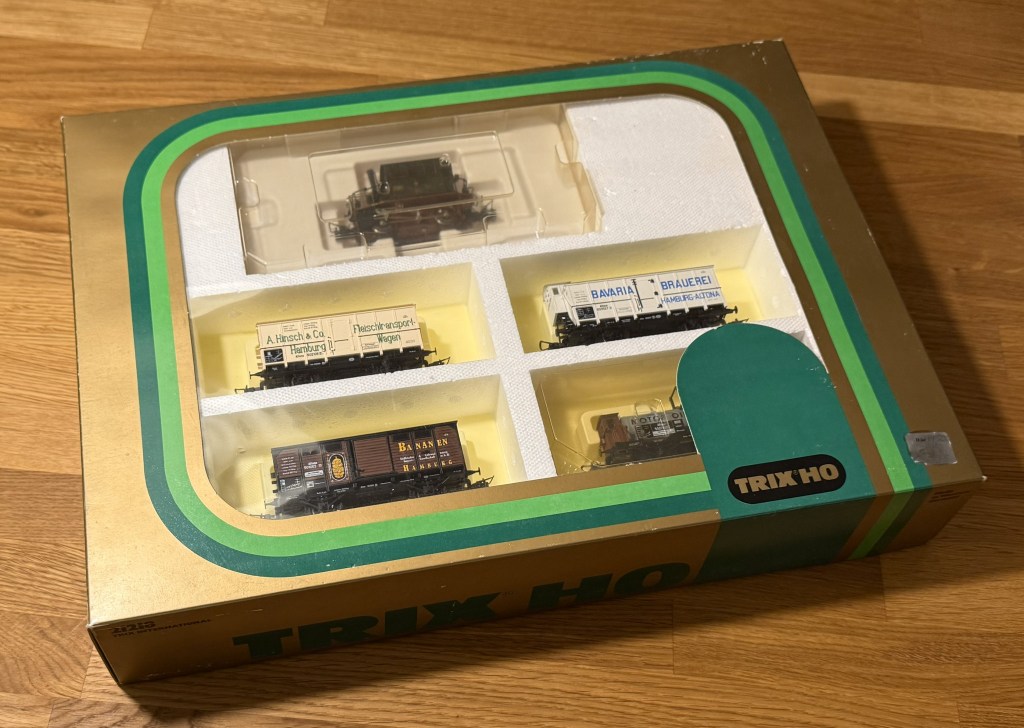
This time, my eye was caught by an ancient Trix-set, boasting that is is “Made in Western Germany” – a wonderful way of setting its age 🙂
The set contained a small steam locomotive and four interesting cars, all carrying names of private companies. They seemed to be in great shape despite their age, and with a modest price tag of about 125€, I could not resist the set.
To really see and understand the models, I needed to photograph them, so I set up a photo diorama and some lights to get a better look.
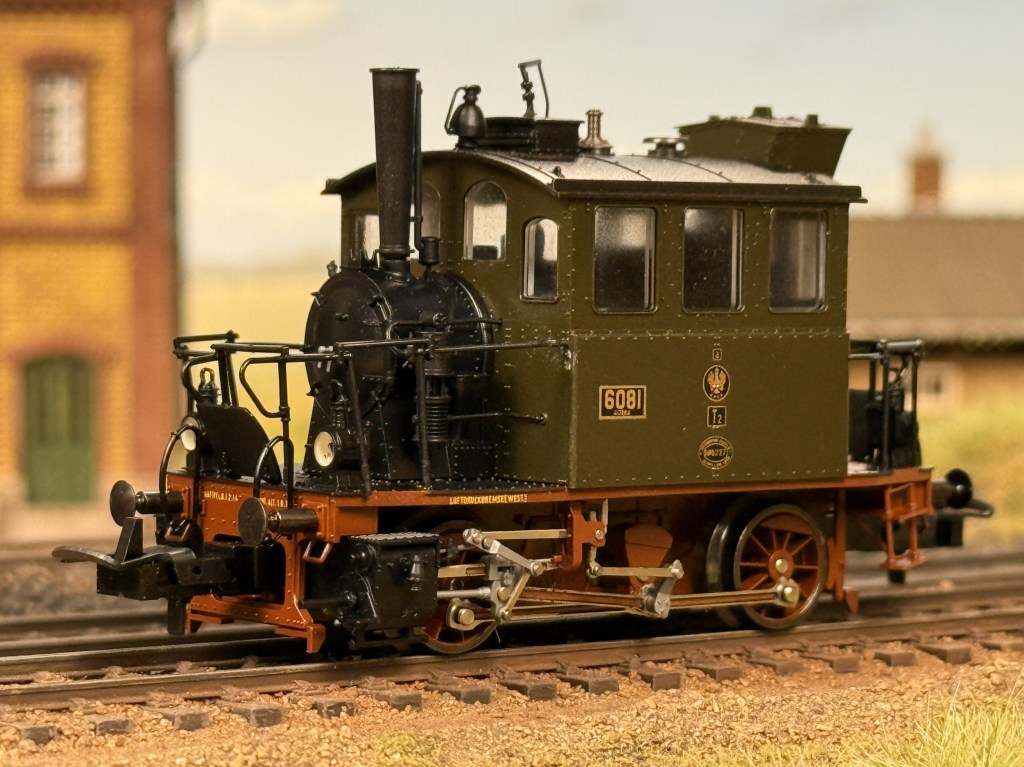
First up is the small steamer, a T2 tank locomotive of the KPEV. The small locomotive was built in Munich by the company Locomotivfabrik Krauss & Comp, which was founded in 1866. The series of locomotives was constructed for the local railways for the Royal Bavarian State Railroads and named PtL 2/2, but eventually three of the locomotives came into Prussian service in the north, namely in Altona in Holstein.
This particular locomotive was stationed in Husum and ran local trains on the Scherrebek–Bredebro and Scherrebek–Lügumkloster routes in Schleswig-Holstein until the area was ceded to Denmark in 1920.
The tiny locomotive must have been well suited to the winding railways of Schleswig-Holstein, slowly prodding along at no more than 50 km/h.
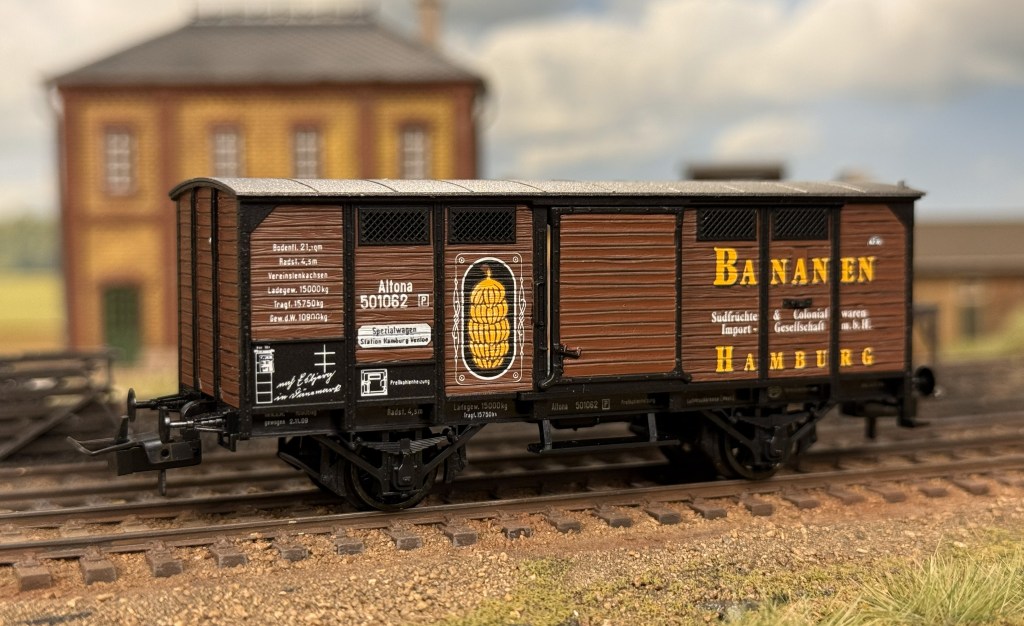
The most striking car in my opinion is the boxcar Altona 501062 marked “Bananen Hamburg”, a logo and the name of the company, Südfrüchte & Colonialwaren Import-Gesellschaft m.b.H. The boxcar has a revision date of 1909, and in this period bananas and other exotic fruit was becoming immensely popular in Northern Europe.
But did the company really exist, or did Trix simply make it up? In this doctoral thesis by Kerstin Wilke about the history of banana imports at the time, the company does not seem to appear.
But the car seems quite distinctive with the big logo and black framing, and has been created in various scales by more than one manufacturer, so perhaps it did exist? Please leave a comment if you know more.
A nice touch is the destination written in cursive writing on the lower left side that says nach Esbjerg in Dänemark, meaning that the car is meant to continue across the border from Schleswig-Holstein into Denmark for the port town of Esbjerg.
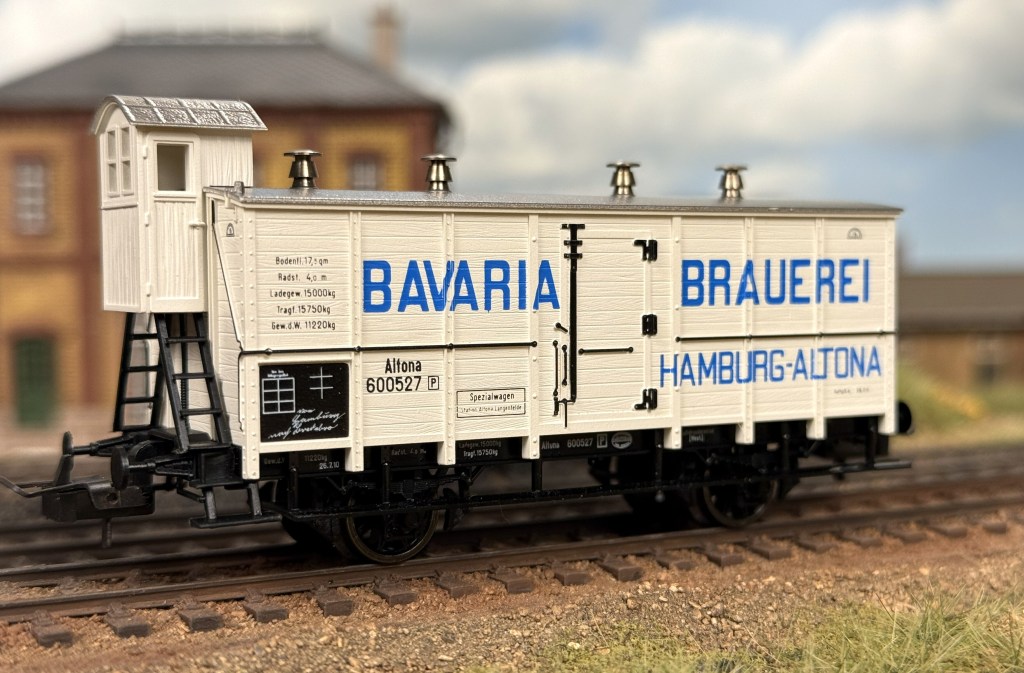
The cooling car Altona 600527 from Bavaria Brauerei is easier to explore. According to the Wikipedia-page about the the company, the brewery was founded in Altona in 1897. In 1922 it was merged with another brewery, and the combined company continued until the 1990’s.
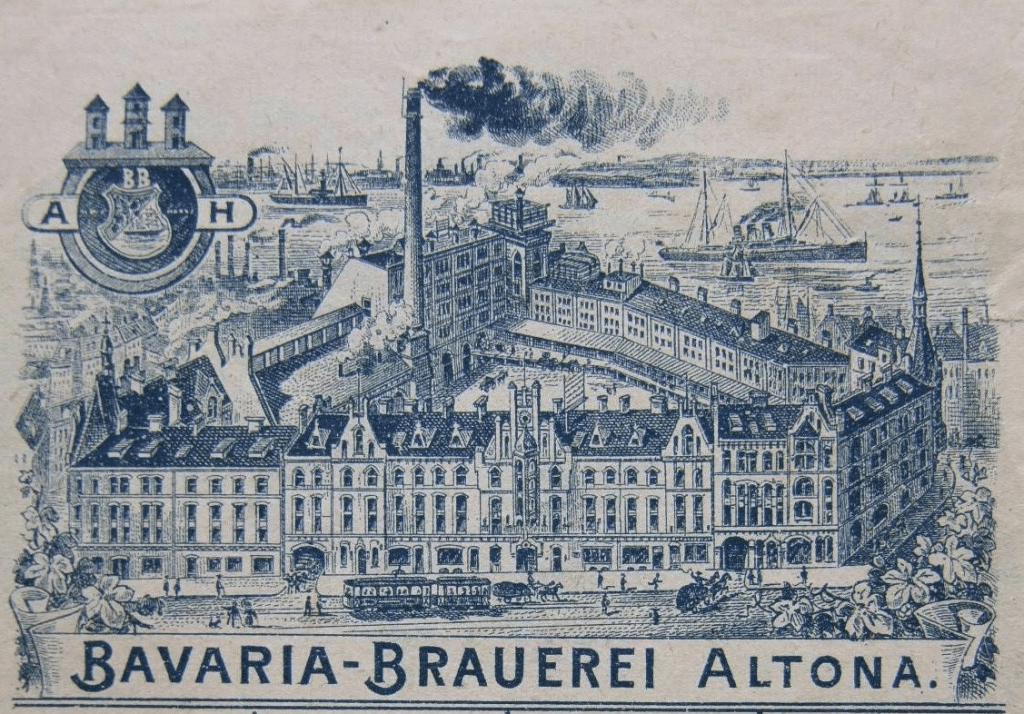
The wonderful old drawing, that I found on the Facebook-page of a community interested in the old brewery, shows the beautiful buildings of the brewery. Note the smoking chimnet, the ships in background and the tram in the foreground – seemingly a busy and succesful place.
No railway connection is visible, but it might be hiding along the harbourfront. It would be fun to see a photo of one of its beer cars.
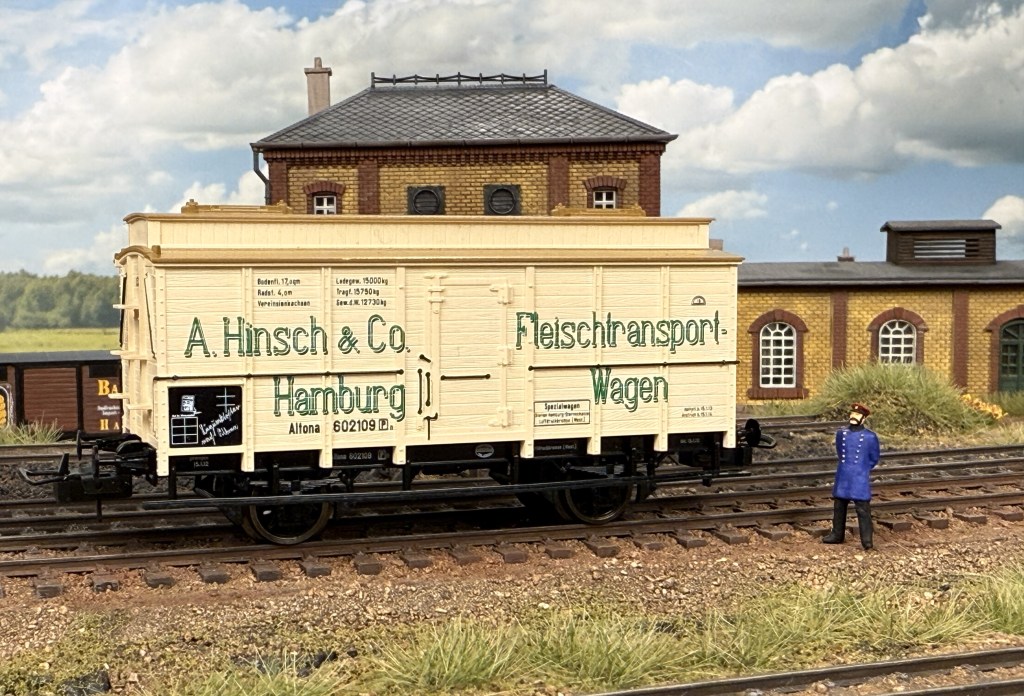
Another white cooling car in the Trix set, the Altona 602109, is designated to transport meat and belongs to the company A. Hinsch & Co in Hamburg.
The black area to the left was used to note the cars destination, and here you can just make out that it says “Lügümkloster nach Altona” – quite a fascinating detail that fits very well with the lines where the T2 locomotive ran.
My limited litterature about businesses in Hamburg does not reveal anything about the company Hinsch, and since it is a quite common name, the web does seem to be of much help either.
The car with a revision date in 1912 is of a quite rare type with the extra roof section, likely for carrying ice for cooling the meat.
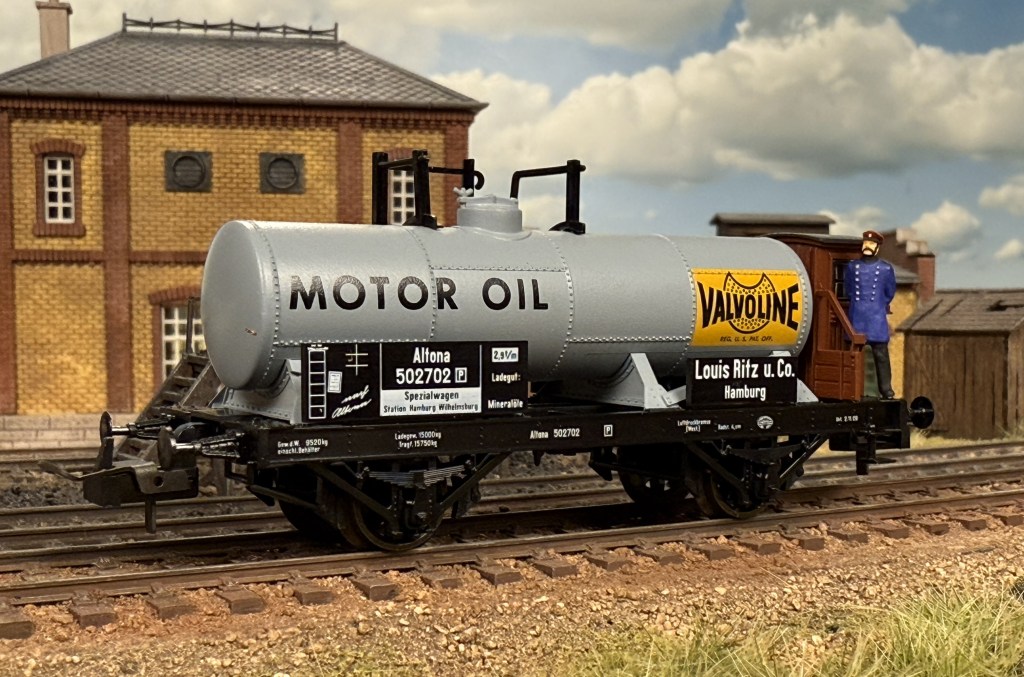
The final car in the set is the Altona 502702, a tank car from Louis Ritz u. Co in Hamburg. The signs advertises Valvoline motor oil, and reading on the web, it seems clear that the company existed and seemed to import oil from the US, where oil under the name Valvoline were sold at least since 1873.
The tank car with a revision date in 1909 is noted on the side to be a special car belonging to the station Hamburg Wilhelmsburg, and has a tiny shelter for the brakeman.
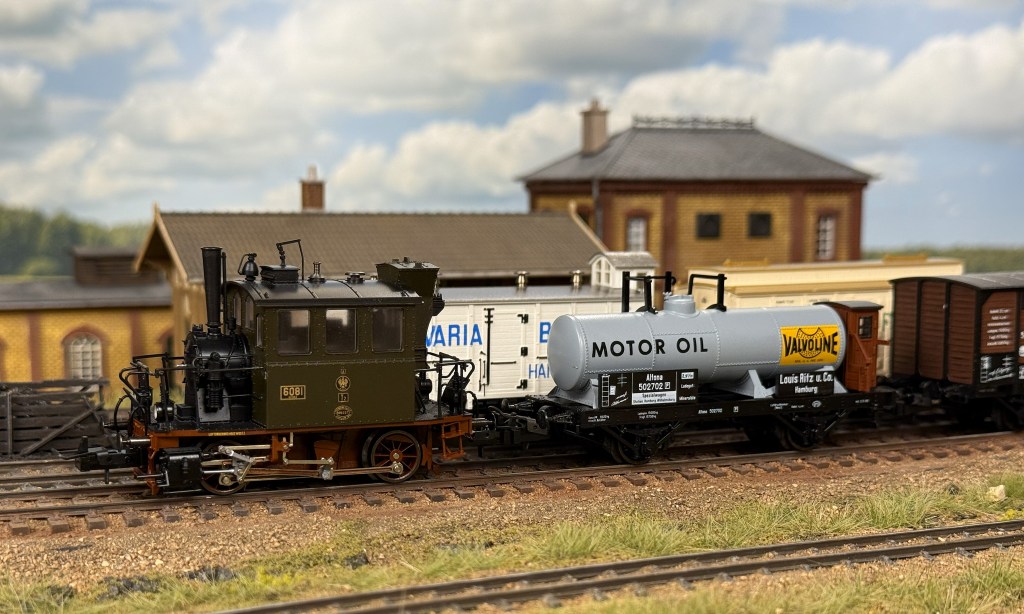
Although it is difficult to learn about all the details and companies on the cars in this set, it seems clear that a lot of effort have been put into research to create a credible small freight train running from Altona to Schleswig in the early 1910’s.
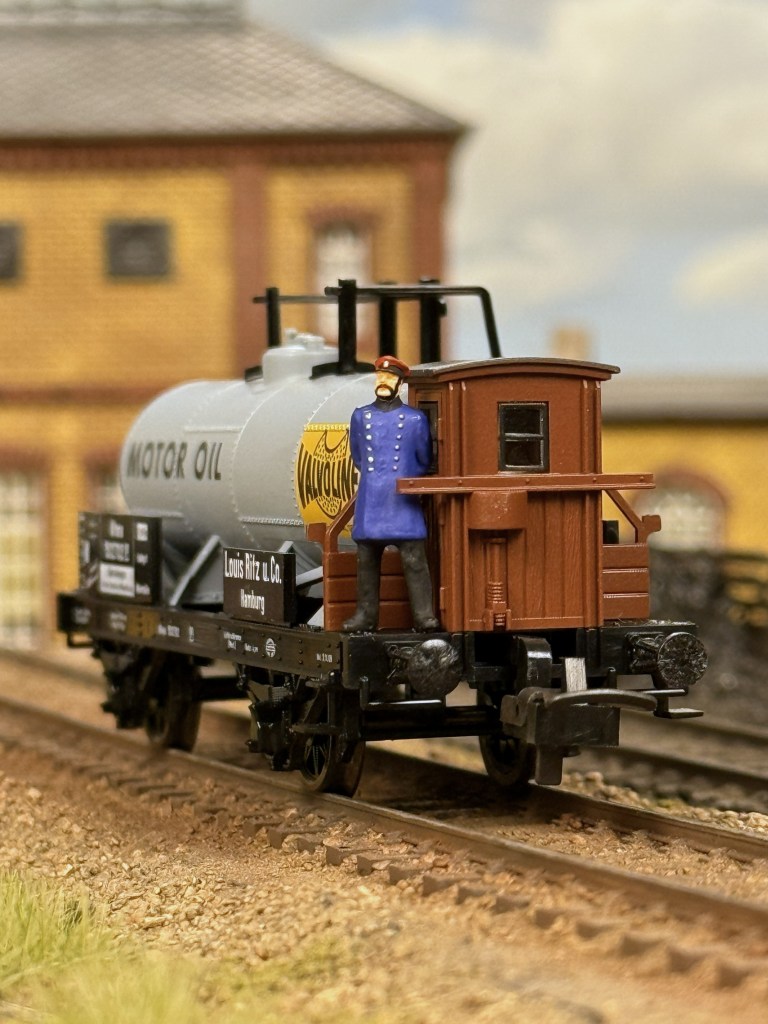
Despite approaching its 40-years birthday, it is a very well detailed set, and with some light weathering I think it will look even better. More about that later…
If you have more information about the models, companies or their history, please leave a comment below. Thank you for reading this far 🙂
 Epoch 1
Leave a comment